
A private jet tells the audience something about a character before a single line is spoken: wealth, power, secrecy or a life lived on the move. That makes private jet scenes common in feature films, TV series, commercials, music videos and fashion shoots. They are also easy to get wrong. A real business jet cabin is small, often booked, and parked at an airport with its own rules. This guide explains how to film a private jet scene, from choosing the right set to blocking, lighting and dressing, so the scene looks expensive without the headaches of a working aircraft.
Start With the Story
Before choosing a set, decide what the scene needs to say and which moments you have to show:
- The arrival. A car pulls up, a character climbs the airstair. You need the jet’s exterior and door.
- The cabin conversation. A deal, an argument or a confession across facing club seats.
- The lifestyle beat. Champagne, a phone call, a laptop, a view out the window.
- The cockpit moment. The pilots, a warning light, a change of destination.
Listing these up front tells you whether you need a full aircraft with an exterior, just a cabin, or a cabin plus a separate flight deck.
Real Jet, Mockup or Real Jet on a Trailer?
There are three common approaches. Chartering or renting a working jet at an airport gives you authenticity, but you work around the operator’s schedule, airport security and limited hours, and you cannot remove any part of the cabin for camera. A built mockup gives you control but can look less convincing up close. The middle path is a real aircraft that has been converted for filming.
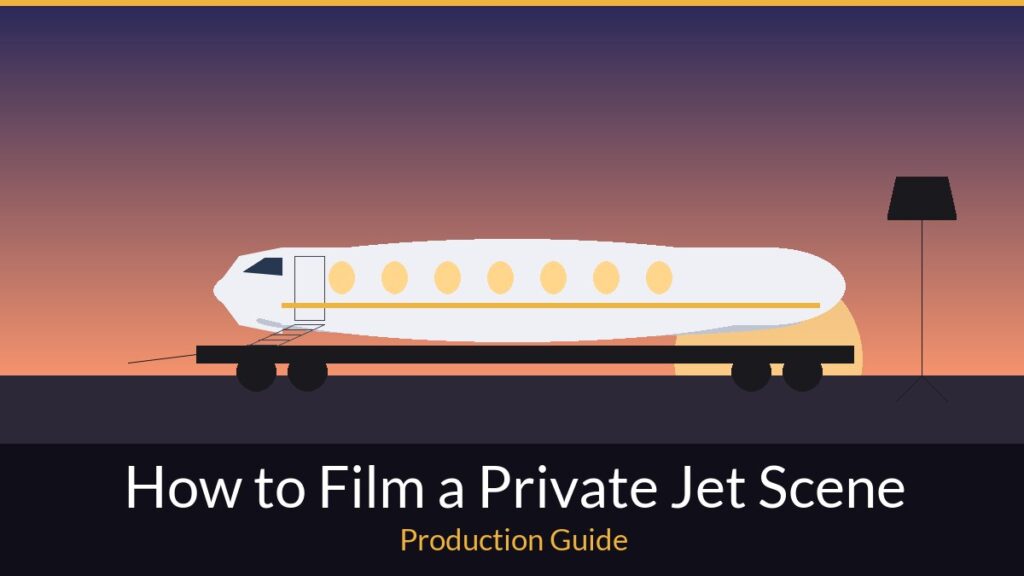
That is what Air Hollywood offers. The Gulfstream III and the Gulfstream IV are real aircraft with complete interiors and exteriors, minus the wings and tail. Each is set on a heavy-duty trailer and can be transported to any location. You get the genuine cabin and exterior of a business jet without needing an airport. For a broader comparison, see our guide to airplane set vs real aircraft.
Choosing Between the Gulfstream III and Gulfstream IV
Both jets give you a real private jet interior and exterior on a trailer. Walk both on a scout and choose based on the cabin layout, finishes and the look your production designer wants. A schematic of the Gulfstream III is available to download from its set page, which helps your DP and designer plan before the scout. If your story also needs a commercial flight, compare the cabins on our aviation sets page.
Blocking a Private Jet Cabin
A business jet cabin is much narrower and lower than an airliner, so blocking matters more than usual.
Use the seating layout
Facing seats are your friend. They give you a natural two-shot and clean singles for a conversation. Keep cast movement simple: standing up in a small cabin is a big moment, so save it for when the story needs it.
Plan the camera positions
Decide early where the camera will sit for each setup: at the rear looking forward for a wide, over a shoulder for dialogue, or outside a window for a reveal. Mark these on the schematic and confirm them on the scout.
Shoot the exterior first
If the scene includes an arrival at the airstair, shoot it while the light is right, then move inside. Because the jets sit on trailers, you can position the aircraft for the background and sun direction you want at your location.
Lighting a Small Cabin
Space for lights inside a private jet is limited, so plan the look with your gaffer before the shoot:
- Light through the windows. Daylight or a sunset feel through the windows is the most natural key light for a jet cabin.
- Use practicals. Cabin lights and small hidden fixtures help the space feel warm and expensive.
- Decide on the view. Choose what the audience sees outside: sky, clouds, a runway or night. Agree on window treatment with your post team early.
- Keep it soft. Hard light on leather and polished wood shows every reflection. Soft sources flatter both the cabin and the cast.
Dressing for Luxury
Dressing is what turns a cabin into a character’s world. Think about who owns or charters the jet and what they would bring on board: glassware, a bottle on ice, designer luggage, a laptop and paperwork for a business scene, or flowers and pillows for a romantic one. Flight attendant and pilot wardrobe sells the setting in wide shots. Air Hollywood Props rents thousands of aviation-themed props, set dressing, wardrobe and accessories, so you can dress the jet in one place.
Most productions avoid real branding, so plan any logos, tail numbers on screen or printed items with your art department and clearances team.
Adding the Cockpit
If the story includes the pilots, you can pair the private jet cabin with a flight deck from our cockpit sets. Our guide on how to plan a cockpit scene covers blocking and lighting for the flight deck.
Building a Full Travel Sequence
Private jet stories often start somewhere else: a hotel, a car, a terminal. At Air Hollywood you can shoot an airport terminal scene, a cockpit and a cabin at one studio, which avoids company moves. When you need a commercial flight too, sets such as the Narrow-Body 737 are available.
Private Jet Scene Checklist
- List every beat: arrival, cabin, lifestyle and cockpit.
- Choose between a working jet, a mockup or a real jet on a trailer.
- Download the schematic and mark camera positions.
- Scout the set with your director, DP and production designer.
- Agree on window treatment and lighting.
- Build a dressing and wardrobe list with the prop house.
- Schedule exteriors for the best light.
Frequently Asked Questions
Do I need an airport to film a private jet scene?
Not with a real jet on a trailer. Air Hollywood’s Gulfstream III and Gulfstream IV can be transported to any location, so you can film arrivals and cabin scenes without airport access.
Can I film the outside of the jet as well as the cabin?
Yes. Both Gulfstreams have complete exteriors, so you can shoot boarding at the door as well as the interior.
Can the private jet come to our stage?
Yes. Each jet sits on a heavy-duty trailer built for transport. Contact us with your location and dates.
How do I see the private jets before booking?
Book a scout. Scouts are by appointment at our studio in Valencia; call 747-400-0747 or contact us online. Our checklist of what to ask when scouting an aviation studio will help you prepare.
Book a Scout
Ready to see the jets? Call 747-400-0747 or contact Air Hollywood to schedule a scout at our studio at 27615 Avenue Hopkins, Valencia, CA 91355.
Related production guides
- How to Film an Airplane Scene Without a Real Plane
- Narrow-Body vs Wide-Body Airplane Sets: How to Choose
- How to Plan a Cockpit Scene for Film and TV
- How to Shoot an Airport Security Checkpoint Scene
- What to Ask When Scouting an Aviation Studio
- Airplane Set vs Real Aircraft: Cost and Logistics for Filming
- Music Video Ideas on an Airplane Set